Friday, October 20, 2023

A Liberal Dose, Oct. 19, 2023 "1619: How Slavery Started in the English Colonies"


A Liberal Dose

October 19, 2023

Troy D. Smith

“1619: How Slavery Started in the English Colonies”


In the last couple of weeks, I have talked about the Trans-Atlantic Slave Trade, how it started, and the role Portugal and Spain played in its expansion. This week I’m going to discuss it in the context of England and her colonies -the antecedent of the United States, so closer to home for most of us.

England was late getting into the colonizing game (if you don’t count Ireland and Scotland). The first successful English colony in the New World was Jamestown, established in 1607. As we’ve discussed before, most of the labor in the early days of that colony was performed by poor white indentured servants, who had essentially sold themselves into servitude (usually for seven years) for passage to the colony, in hopes of one day being free and owning land.

Twelve years later, a ship called the White Lion landed in the Virginia colony. It was an English privateer operating under a Dutch letter of marque -in other words, the ship and its sailors were English, but they had a license from the Netherlands authorizing them to attack Dutch enemies in their name. The English and Dutch were allies against the Spanish and Portuguese. The White Lion had captured a Portuguese ship and taken her cargo, which included African slaves (remember how active Portugal was in the slave trade). The White Lion’s captain traded about two dozen of these slaves to the Virginia colonists for food and supplies. This was the first incidence of the slave trade in English colonies. It is NOT correct that this was the first instance of slavery in North America, as many modern sources claim; the Spanish had been bringing African slaves to North America for a century or more by that time. It was the first slavery in an ENGLISH colony in North America.

Being new to the game, it took the Virginia colonists a while to get the hang of it. They treated these first Africans as indentured servants, freeing most of them after a few years; they and their children were the beginning of a population of free blacks in the Virginia colony. Meanwhile, starting in earnest after the bloody war with the Powhatans of 1622, the Virginians were enslaving captured Native Americans. A shipment of over a hundred more African slaves arrived in 1628, and before very long the consensus was that Africans were to be enslaved for life, not temporarily. For roughly fifty years, the forced labor in Virginia tobacco plantations was a shared experience between three groups: African slaves, poor white indentured servants, and Native American captives. They worked in the fields together, socialized together, and frequently intermarried. Free blacks, meanwhile, had many of the same rights as other colonists.

Meanwhile, in the Caribbean, the English established colonies in Barbados in 1627, the Bahamas in 1648, and had taken Jamaica from the Spanish by 1661. These colonies became home to sugar plantations, and were operated in the same way the Spanish operated theirs- with a high death rate for the African slaves due to harsh treatment.

A scholar named Gary Taylor did a fascinating study about twenty years ago, published as “Buying Whiteness.” He did a computerized search through digital copies of everything published in London in the 1600s, looking for instances of people being referred to as “white.” He found virtually no such instances in the early 1600s, then they started popping up in the mid-1600s, and by the late 1600s they were extremely common. In other words, the timeline of English people thinking of themselves as “white” (which no one, really, is) perfectly matched the timeline of the growth of slavery in English colonies. Paintings changed, too- instead of having ruddy complexions in portraits, English were painted as almost alabaster white. Did their complexion change? No. Their self-perception changed. They were now defining themselves AGAINST someone -someone they had come to view as inferior.

--Troy D. Smith, a White County native, is a novelist and a history professor at Tennessee Tech. His words do not necessarily represent TTU.


Buy the book A Liberal Dose: Communiques from the Holler by Troy D. Smith HERE


You can find all previous entries in this weekly column HERE

A list of other historical essays that have appeared on this blog can be found HERE

Author's website: www.troyduanesmith.com

The author's historical lectures on youtube can be found HERE


Thursday, October 19, 2023

Killers of the Flower Moon, by... Joe Simon and Jack Kirby?? And Alex Toth??


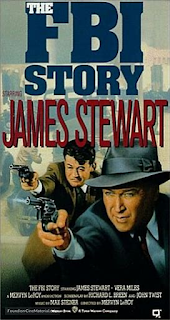
October 20th is the premiere of the newest Martin Scorsese film, Killers of the Flower Moon, starring Robert DeNiro and Leonardo DiCaprio. Described in its wikipedia entry as an "epic Western crime drama film," it is an adaptation of the bestselling 2017 nonfiction book by David Grann. The story centers around the murders of at least 20 (perhaps many more) members of the Osage tribe in Oklahoma in the early 1920s, by unscrupulous white men after their oil money. It also happened to be the first major case investigated by the newly-formed FBI. The series of events has faded into obscurity for most Americans (except the Osage people), with most having no idea such a thing ever happened. Grann and Scorcese are not the first to tell the story, though... it was the topic of Chickasaw author Linda Hogan's debut novel, Mean Spirit, which was nominated for a Pulitzer Prize in 1991. Long before that, in 1959, it was one of the plot threads of the movie The FBI Story, starring James Stewart. 


And before that... it was the subject of a 1948 story in a crime comic book, Headline Comics, by the legendary team of Joe Simon and Jack Kirby, who at the beginning of that decade had co-created Captain America. The story was actually an ideal comic book subject, as by 1948 superheroes had mostly fallen by the wayside and two of the biggest genres replacing them in the racks that year were crime stories and westerns. This tale was both rolled into one.


And then it was in the comics again... when Dell did a movie adaptation of The FBI Story in 1959, by another comics legend, Alex Toth, in Four Color #1069. 


Here are the pages relating to the Osage murders from that Dell comic by Toth: 


And here's the 1948 version by Simon and Kirby:


Thursday, October 12, 2023

A Liberal Dose, Oct. 12 2023 "How Slavery Differed in the New World"


A Liberal Dose

October 12, 2023

Troy D. Smith

“How Slavery Differed in the New World”


This week we are going to see just how the Trans-Atlantic Slave Trade was different from the various forms of slavery that existed for thousands of years before, and even from the Arab Slave Trade that was taking Africans away from their home continent at the same time.

The Spanish “discovered” the New World in 1492, and Columbus immediately began enslaving the Native Americans he encountered, paving the way for Spain to start their own sugar plantations in the Caribbean islands. Just two years later, in 1494, the pope divided all undiscovered lands between Spain and Portugal, with Portugal getting Brazil and many territories in Asia, while Spain got to keep the Philippines and the rest of North and South America (a pretty good deal for them, as it turned out).

Within a few decades, a movement arose in Spain protesting the harsh treatment of indigenous people, and especially their enslavement. The principal figure in this movement was Bartolomè de las Casas, who as a young man had served as a soldier under Columbus and was repulsed by what he witnessed, and who later entered the priesthood and spent his life fighting for the rights of the people Columbus had called “los Indios.” This led to a ban on enslaving Natives (though they were still terribly mistreated) in Spanish territories. Unfortunately, that led to an increased reliance on the African slave trade, which the Portuguese had already been using heavily.

Spain and Portugal wanted all the African slaves money could buy (and they were making plenty of money from their new possessions to do so). The demand escalated -there were a LOT of Spanish settlements established in the New World. In particular, though, slave labor was used in the Spanish holdings in the Caribbean (Cuba, Puerto Rico, etc.) and the Portuguese colony of Brazil -places where the incredibly lucrative sugar was grown on plantations. There was a high labor turnover rate -a polite way to say death rate -because the growing season was year-round, meaning that -unlike in places like the English colony of Virginia, which had tobacco plantations -there was no winter lull during which slaves could have lighter duties and recover their strength. Spanish and Portuguese planters -and later English and French ones when those countries took over some Caribbean islands -figured out that it was cheaper to work your slaves to death and then buy more than to invest the money it would take in clothing, food, and healthcare to keep them alive.

The result was that, of the 13 million Africans sold from their homes in the Trans-Atlantic Slave Trade, 11 million were sent to the New World (the rest mostly to Europe to be house servants). Of those 11 million, about 500,000 (or around 5%) were sent to the English colonies on the North American mainland. Almost all the rest were sent to South America (mostly Brazil) or the Caribbean, where they would lead short, difficult lives. Meanwhile, the demand for new slaves went through the roof, leading African tribes and kingdoms to engage in perpetual, large scale warfare with one another. Whereas captives had once been a by-product of occasional war, they now became the primary purpose of constant war. This was ultimately due to the demand created by a global capitalist economy (a brand-new thing) and the colonial/imperial forces making it turn. It was like slavery as it existed before had been give a massive dose of steroids and plunged into overdrive. Slaves were no longer just house servants or public labor for the government or limited businesses like shipyards or mines. They were cogs in a massive, global agricultural economy that gobbled up exponentially more and more human chattel. Nor should we delude ourselves that their forced labor was NECESSARY; it was only necessary insofar as being cheaper and producing more profit for owners and investors. 

There had never been anything like it.


--Troy D. Smith, a White County native, is a novelist and a history professor at Tennessee Tech. His words do not necessarily represent TTU.


Buy the book A Liberal Dose: Communiques from the Holler by Troy D. Smith HERE


You can find all previous entries in this weekly column HERE

A list of other historical essays that have appeared on this blog can be found HERE

Author's website: www.troyduanesmith.com

The author's historical lectures on youtube can be found HERE


Saturday, October 7, 2023

A Liberal Dose, Oct. 5, 2023 "How the Trans-Atlantic Slave Trade Began"


A Liberal Dose

October 5, 2023

Troy D. Smith

“How the Trans-Atlantic Slave Trade Began”


Last week I told you about the Arab slave trade, which involved mostly captives from sub-Saharan Africa but also involved some other groups of people, including Europeans captured on or near the Mediterranean (perhaps as many as a million over a couple of centuries), and which lasted around a thousand years. It has been estimated that as many as 17 million people were sold as slaves in that millennium. How does that compare with the Trans-Atlantic slave trade, wherein Europeans transported African slaves to the New World? That has been estimated at around 13 million -but over only 350 years. So, during that 350 years, Europeans were trading two-and-a-half times as many slaves as were their Arab counterparts. So that’s one big difference -sheer scale. Let’s discuss how that happened.

It all started in the “Age of Discovery,” roughly the early-to-mid 1400s. Europeans had been exposed to luxury items from the Far East (like silks and spices -and sugar) during the Crusades in the Middle East. It was impossible to trade directly with East Asian lands like India and China, because the Muslim-controlled Middle East was in-between Europe and those far eastern markets. It’s fair to say that European Christendom and Islamic lands were not on the best terms, post-Crusades. It was therefore either impossible to get at those Far Eastern trade goods, or you could only get them by going through Middle Eastern middlemen who had a considerable markup attached. This is why so many Europeans in the 1400s were wanting to explore oceans, hoping to find a way to bypass the Muslim World and get at those treasured items. There was also a strong desire for access to the gold and gems (and, later, coffee) of southern Africa -and Muslims were blocking them there, too.

Enter Prince Henry of Portugal, alias Henry the Navigator. Henry supervised the construction of a new, lighter and more maneuverable ship, the caravel -and invested money in the training and hiring of cartographers and navigators, convinced they could make their way down the (unknown to Europeans at the time) coast of Africa and find the source of all that gold. The plan was to sail west and swing wide around northwest Africa and the Arabs and Berbers there, looping back east south of the Sahara Desert.

While making that initial swing into the Atlantic, though, the Portuguese stumbled across several uninhabited islands previously unknown to them, namely Madeira and the Azores (still part of Portugal today). These semi-tropical islands, it turns out, were capable of growing sugarcane. It would no longer be necessary to buy it from India or intermediaries. The Portuguese government encouraged Portuguese farmers to move to the islands to work in cane fields -to be transplanted, in other words. Which is why such farms began to be called, in English, plantations. However, it proved hard to convince even poor Portuguese people to move out to the middle of nowhere for very low wages, so another tack was tried -slavery. Initially, the slave labor consisted of the native people of the nearby Canary Islands, which Portugal had already claimed. However, they had low resistance to disease, and quickly died off.

Meanwhile, the Portuguese had, in fact, made contact with the African peoples south of the Sahara -people who had been participating in the Arab slave trade for centuries by selling off the captives they took when warring with one another. The Portuguese began buying African slaves from them, as well, to work on their sugar plantations off the coast of Africa. And so had been planted -on a very small scale -both the Trans-Atlantic slave trade and the genocide of indigenous people…  for the sake of trade and profit.

In ensuing decades, both the Portuguese and their Spanish allies/competitors/frenemies would push farther into the Atlantic looking for trade routes. They would find two huge continents ripe for cultivation -but, inconveniently, already inhabited.

To be continued.


--Troy D. Smith, a White County native, is a novelist and a history professor at Tennessee Tech. His words do not necessarily represent TTU.


Buy the book A Liberal Dose: Communiques from the Holler by Troy D. Smith HERE


You can find all previous entries in this weekly column HERE

A list of other historical essays that have appeared on this blog can be found HERE

Author's website: www.troyduanesmith.com

The author's historical lectures on youtube can be found HERE


Saturday, September 30, 2023

A Liberal Dose, Sept. 28, 2023 "Does the History of Slavery Matter Today?"


A Liberal Dose

September 28, 2023

Troy D. Smith

“Does the History of Slavery Matter Today?”


This week I am going to talk about a sensitive, and unpleasant, topic: slavery. A few week ago, my friend John Gottlied, after condemning the blot of slavery in the harshest terms, pointed out that there were slaves before Thomas Jefferson. This is very true. I am not really reacting to John here, but rather to what I think a lot of people feel: that while slavery was a travesty, it is not fair to lay all blame for it on Europeans, as if they and their descendants were uniquely guilty, when it had existed for millennia. It also occurred to me that a lot of people might not be aware of how slavery grew, and of how the transatlantic slave trade really WAS new and different, not having the historical context. It further occurred to me that future generations will understand it even less, as our current state government (and others around the country) are determined to make sure no one ever really has to think about it (or know about it) much. From some people’s perspective, if Americans simply stopped ever talking or thinking about slavery, they would stop thinking and talking about race… and it would go away. I disagree, of course.

I encourage students to watch the brilliant (and fact-based) film “Twelve Years a Slave,” which I think is the most accurate portrayal of slavery ever to be shown onscreen. I urge them that, when certain difficult scenes occur, they should not obey their instincts and close their eyes or turn away. They must witness. That has been one of the biggest problems of our country -our collective tendency to look away and not acknowledge realities that make us feel bad. That is by no means a new or recent phenomenon.

The history of slavery is one of my primary research areas and the focus of my Ph.D., so I’ve spent a lot of time learning about it… and thinking about it. I want to spend just a little time this week talking about that institution as it existed before Columbus sailed across the ocean, and then later explain what changed, how, and why.

Here’s the short, easy version of slavery: it has probably existed for as long as humans have. For as long as there have been separate bands of people who can look at those outside their group as enemies and lesser beings who can justifiably be exploited. In the ancient world, you usually became a slave by virtue of a stronger country or band conquering yours. You were more likely to become the property of a king or kingdom than of an individual, and you were lumped in with all the other captives to work on major projects for that kingdom -building roads, pyramids, great walls, et cetera. Eventually, though, slaves did become commodities to be sold on the open market. In many cases, slavers traveled with imperial armies. Sometimes individuals had contracts with the king to buy captives and re-sell them at a profit to other individuals, where they would most often become household servants or work in mines or other hard physical jobs.

However. Those captives were still just a by-product of war in the ancient world -not the GOAL of war.

By the Middle Ages, an extensive slave trade had developed in northern Africa and the middle east, controlled primarily by Arabs. They bought captives from Sub-Saharan Africa, from other parts of the middle east, and from Europe. Race was not a factor. Anyone could become a slave. Most of the slaves from that route became household servants or laborers in the Arab world, but some were sold farther afield. There was an effort in the middle ages, in modern day Iraq, to have large numbers of slaves concentrated on massive farms or mining operations, but frequent revolts kept that from catching on.

What changed? To be continued.


--Troy D. Smith, a White County native, is a novelist and a history professor at Tennessee Tech. His words do not necessarily represent TTU.


Buy the book A Liberal Dose: Communiques from the Holler by Troy D. Smith HERE


You can find all previous entries in this weekly column HERE

A list of other historical essays that have appeared on this blog can be found HERE

Author's website: www.troyduanesmith.com

The author's historical lectures on youtube can be found HERE


Friday, September 22, 2023

A Liberal Dose, September 21, 2023 "Now Her Ghost Follows Me Everywhere"


A Liberal Dose

September 21, 2023

Troy D. Smith

“Now Her Ghost Follows Me Everywhere”


“It is impossible to say how first the idea entered my brain; but once conceived, it haunted me day and night… I loved the old man. He had never wronged me. He had never given me insult. For his gold I had no desire. I think it was his eye! yes, it was this! … and so by degrees -- very gradually --I made up my mind to take the life of the old man, and thus rid myself of the eye forever.”

That is, of course, from the beginning of the classic Edgar Allen Poe story “The Tell-Tale Heart,” published in 1843. Perhaps you are also familiar with Poe’s “The Cask of Amontillado” (1846): “The thousand injuries of Fortunato I had borne as I best could, but when he ventured upon insult I vowed revenge. …but the very definitiveness with which it was resolved precluded the idea of risk. I must not only punish but punish with impunity.” 

If you are familiar with them, it is quite likely you first encountered them in school. I remember reading the first one in middle school, and the second one in high school. Poe engaged my imagination. And, I feel compelled to point out, I have no murder victims buried under my floorboards or behind any brick walls.

I grow weary of complaining about parents and government officials trying to prevent history teachers from teaching actual history; now, here in our town, people are calling for the head (or at least the job) of an English teacher who dared to engage her students in creativity and imagination. And we have a school board member castigating the school superintendent for not punishing said teacher harshly enough.

And what was the crime? This creative writing prompt: “I never meant to kill her. I only wanted to hurt her, but now her ghost follows me everywhere.”

Some students were uncomfortable with this assignment because it took them to “a dark place.” This may well be. The teacher’s stated goal was to get them to stretch themselves and get outside the box -which is never comfortable. As I understand it, she did not invent the prompt but learned of it through a popular website for English teachers. There are a lot of ways it could have been expanded, depending on the student doing it. Just looking at the prompt itself, I get the following ideas which could become the moral of this story: You have to take responsibility for your actions. Bad actions, intentional or not, can haunt you the rest of your life. Maybe “only wanting to hurt someone” is a bad idea because it can spiral out of control and destroy lives.  My point is, a prompt like this could inspire a meaningful and worthwhile thought process. If it were purely about the alleged joy of committing murder, and nothing else, it would not have begun with contrition and bad consequences.

Let’s say that using the prompt really was a bad idea. Even so, the teacher has suffered enough and clearly learned from it -why keep hammering at her? Should this one assignment drive her out of her chosen profession?

In fact, why keep hammering at teachers, period? We have a crisis in teaching in this country. More and more teachers are quitting, and more and more young people are deciding they don’t want to become teachers after all, because they see how teachers are treated today.

For the life of me, I can’t figure out how we got to the point that people think “making students comfortable” is the primary aim of education. It is the opposite. And often those same people are perfectly happy to make other people’s children uncomfortable to prevent any momentary discomfort for their own. 

How’s this for a prompt: “I didn’t mean to kill the teaching profession, now her ghost follows me everywhere.”

--Troy D. Smith, a White County native, is a novelist and a history professor at Tennessee Tech. His words do not necessarily represent TTU.


You can find all previous entries in this weekly column HERE

A list of other historical essays that have appeared on this blog can be found HERE

Author's website: www.troyduanesmith.com

The author's historical lectures on youtube can be found HERE


Saturday, September 16, 2023

A Liberal Dose, Sept. 14, 2023 "Who Is It That 'Weaponized the Justice System'?"


A Liberal Dose

September 14, 2023

Troy D. Smith

“Who Is It That ‘Weaponized the Justice System’?”

I want to open this week by acknowledging John Gottlied’s references to my column last week. I can honestly say the same things about his writings that he said about mine: I often disagree (sometimes vehemently), I agree more often than people might expect, and I eagerly await each week’s new installment.

Now on to this week’s topic.

Sometimes my irony barometer is strained to the point of breaking. Oddly enough, it usually occurs as a result of Trump or his followers. Take, for instance, this refrain we are constantly hearing nowadays: “Joe Biden is weaponizing the Justice Department by going after his political enemies!” Or this nugget: “We have a two-tiered justice system, with conservatives on the bottom being persecuted!”

Let’s take that second one first. We DO have a two-tiered legal system, all right. What if Trump really had won in 2020 (instead of just pretending to), and those January 6 protesters had been Black Lives Matter activists? Do you think they would have all gone home and slept in their own beds that night? How many do you think would have never gone home at all? I think we all know it would almost certainly have been more than the one rioter who was killed in the real attack. This, despite the fact that all the numbers show that the vast majority of terrorist attacks in this country since 9/11 have been perpetrated by far-right extremists.

But that first one, about “weaponizing the Justice Department,” that is a real doozy. It was Donald Trump who had, as one of his main campaign slogans in 2016, “Lock her up!” This was over Hillary Clinton’s alleged carelessness with classified documents online, when Trump illegally kept more sensitive documents (involving, among other things, nuclear secrets) in his pool-house and bathroom. It was Donald Trump whose two Senate-confirmed attorneys-general, both of them in ideological lockstep with him, wound up losing their jobs because they drew a line at how far they were willing to abuse their offices at his command. In fact, just 26 days before the 2020 election, Trump called for Bill Barr to indict Joe Biden for the “greatest crime in history,” allegedly “perpetrating the Russia hoax.” Heck, just nine months ago Trump said that “A Massive Fraud of this type and magnitude allows for the termination of all rules, regulations, and articles, even those found in the Constitution.” 

Before you think I am practicing the sort of what-aboutism I criticize in others, allow me explain the difference. Hillary Clinton did not get locked up, and Joe Biden did not get indicted, for one simple reason. There was no evidence. It was not political -it was Republican officials who declined to do what Trump wanted, for the simple reason they could not win in court with nothing more than accusations. Everything that Donald Trump and his cronies have been indicted for, and are being tried for, is backed up by massive amounts of evidence. This is further reinforced by the fact that, as we learned last week, the Georgia grand jury also recommended indictments for Lindsay Graham, Mike Flynn, and several others (including both former Republican senators from Georgia). If the whole thing was a political hit job, a Republican as prominent as Lindsay Graham would surely have been getting his mug shot taken -but the D.A. declined to indict those individuals because there wasn’t as much clear evidence against them in this case.

To decline to prosecute someone with this much evidence of criminality, just because of an election… THAT would be the miscarriage of justice. Laws matter.

--Troy D. Smith, a White County native, is a novelist and a history professor at Tennessee Tech. His words do not necessarily represent TTU.


Buy the book A Liberal Dose: Communiques from the Holler by Troy D. Smith HERE


You can find all previous entries in this weekly column HERE

A list of other historical essays that have appeared on this blog can be found HERE

Author's website: www.troyduanesmith.com

The author's historical lectures on youtube can be found HERE